


Then, I can tell you that the boiled-egg diet might appeal to you especially if you’re trying to reduce weight. The fact is, this fad diet will not lead to long-term changes that make your health better. Still curious?
Okay…. I’m giving you the guideline of how this plan works ,the pros and cons of the plan and also the research analysis.
Eggs are nutritious and healthy food which are enriched with vitamins, minerals, antioxidants, protein, and fats. In different territories of the world where eggs are not expensive and easily available, many people eat them regularly or even regularly.
The Boiled Egg Diet
The boiled-egg diet is obviously focused on eggs, especially hard-boiled eggs. You can eat a minimum of 2-3 eggs in a day, and keep it in mind that you don’t even have to incorporate them into every meal. Why would someone want to eat this way, right?
Do you know, it has a bit of celebrity backing, It is Nicole Kidman who has used this egg diet. Charles Saatchi, the founder of the ad agency Saatchi & Saatchi, has also tried the boiled-egg diet.
How Does The Boiled-Egg Diet Work?
Here I’m giving you the typical version that is similar to low-carb Atkins, writes Arielle Chandler in The Boiled Egg Diet.
A day’s meals (generally) look like this:
Try to eat at least two eggs and one piece of fruit for breakfast. The breakfast should be low in carbs and contain vegetables or protein. Protein is optional but try to make your meals nutritious by adding protein.
You can eat eggs or lean protein and low-carb vegetables for lunch.
Have eggs or lean protein and vegetables which should be low in calories for dinner.
Is The Boiled-Egg Diet Good For You?
On the whole, this diet consists of healthy food, but it’s not actually a balanced and healthy diet. The boiled-egg diet is restrictive, incredibly low in calories, and faddish.
“I don’t think you should be on a diet that requires an obsession with one food,” said Lisa Young, PhD, RDN, the New York City–based author of Finally Full, Finally Slim.
Eggs are the main staple of the diet and are healthy for you in moderation just not as your only main food. The American Heart Association (AHA) says that people who are physically healthy can enjoy up to one egg per day, and older people with healthy cholesterol levels can have two eggs a day.
“Eggs make a great breakfast,” says Dr.Young. He thinks that a hard-boiled egg is actually a nutritious snack, but consuming a variety of foods is a healthier way to eat and to become healthy.
Eggs are a good source of protein. A large boiled egg has almost 78 calories with 6.3 grams of protein, 5.3 g of fat, 0.6 g of carbohydrates, and 0 g of fiber.
Eggs also consist of many nutrients like vitamin D and choline, in addition to being rich in proteins,says Amy Shapiro, RD, the founder and director of Real Nutrition in New York City.
A complete protein consists of all the essential amino acids in appropriate amounts.
Choline is a nutrient. This nutrient helps in producing neurotransmitters that help in controling memory and mood, among other functions.
Is It Safe To Follow the Boiled-Egg Diet?
If you have any medical history, restrictive diets of any kind (including the boiled-egg diet) aren’t for you.
People who suffer from chronic health conditions, especially the condition that requires taking medication, would be wise to check with their healthcare specialist before making any changes to their diet and the boiled-egg diet would count as beneficial diet.
On the other side, people who don’t have any medical history or do not have any current health condition are unlikely to face health issues if they try to do the boiled-egg diet in the short term.
“I consider this a red-carpet diet. It’s only something to try when you want to see results quickly and you’re okay with feeling restricted for a short period of time,” says Shapiro.
She predicts that this diet takes its cues from the 1960s, a time when “it was considered ladylike and demure to restrict yourself,” she says. But that’s not a healthy way to lose weight.
In addition, there is still a confusion about whether eggs are good for you, as they contain dietary cholesterol. Each boiled egg contains 186 mg of cholesterol.
One study showed that each additional 300 mg of dietary cholesterol consumed per day was interlinked with a 17-18% increased risk, respectively, of cardiovascular disease and death from any cause.
The 2020–2025 Dietary Guidelines for Americans advised that the consumption of dietary cholesterol should be “as low as possible without compromising the nutritional adequacy in the diet.” The guidelines elaborated that cholesterol appears naturally in small amounts in some animal foods.
Do Eggs Raise Cholesterol Levels?
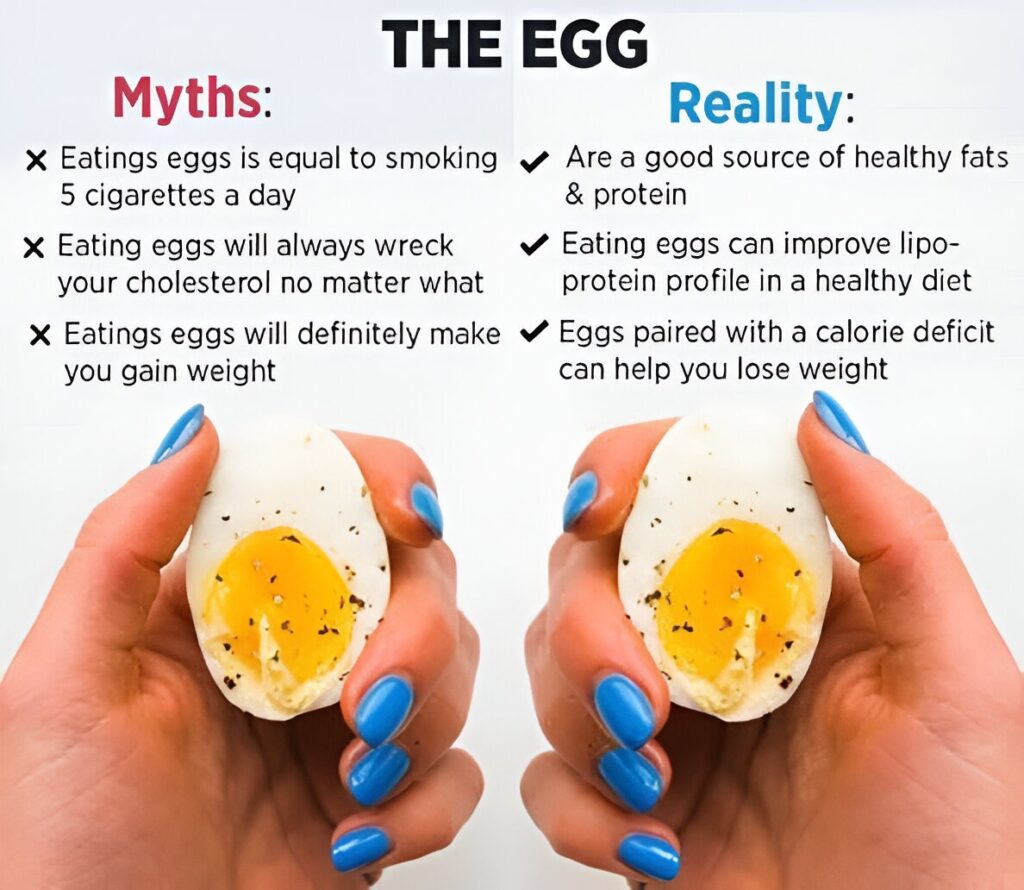
Recent research and meta-analyses have observed that eating eggs may not increase the risk of heart disease or its risk factors, like inflammation, stiffening of the arteries, and high cholesterol levels.
A few randomized controlled trials (RCTs) which are the gold standard of scientific research and known for their ability to reduce bias observed identical findings, typically in smaller study groups of 20–50 healthy adults.
For example, one small RCT found that when compared with an egg-free high carb breakfast, eating 2 eggs or a half cup of liquid eggs for breakfast had no significant effects on blood cholesterol levels.
RCTs in people who are diabetic have found that eating about 6–12 eggs per week didn’t show any negative affect on total blood cholesterol levels or cardiovascular diseases risk factors. Instead of rising cardiovascular cholesterol, it increased high density lipoprotein (HDL) cholesterol.
How Many Eggs Can You Safely Eat?
Many people can eat a couple of eggs per day. But the amount may vary for certain groups.

At some point, you may have heard that the cholesterol found in eggs contributes to heart disease and is the leading cause of death around the world.
For years, this belief was perpetuated by health officials and medical and nutrition associations alike, leading some people to avoid eating eggs
Eggs are undoubtedly higher in cholesterol than many other foods. Still, they’re also packed with beneficial bioactive compounds and other disease-fighting nutrients.
Recent research suggests that the link between eating eggs and elevated heart disease risk may not be as strong as once thought though there is still much debate on the topic.
Many health guidelines and recommendations have lessened the restrictions they once set around egg consumption. Yet, many people still worry that eggs could be detrimental to their heart health.

Conclusion
Eggs are proven to be a good source of protein and are a healthy option to eat but current evidence is conflicting, more rigorous studies in humans are needed to better understand how eating eggs affects blood cholesterol levels in different populations.